
It’s a stormy night and the power drops out. Your alarm is supposed to switch to its backup battery and keep watching over the house.
If that battery is old, it may not. The keypad goes dark, the siren has nothing to run on, and the system you’ve been counting on is just a box on the wall.
A worn-out backup battery often goes unnoticed. The keypad looks normal, the arming lights come on, and you feel as protected as the day it was installed. You only find out when the mains power goes, and that’s the worst possible time.
What the backup battery actually does
Your alarm panel runs on mains power day to day. The backup battery is there for the moments mains power isn’t: a storm, a blackout, a tripped safety switch, or someone who wants to get past your alarm and cuts the power to the house.
When the battery can’t do its job, the panel, siren and communicator can all drop out together. No siren, no alert to your phone, no signal to your monitoring company.
How long do alarm batteries last?
Most home alarm panels use a sealed lead-acid battery, and they typically need replacing every 3 to 5 years. Heat shortens that, and panels are often installed in hot garages, laundries and cupboards.
Here’s the catch. A battery that has lost most of its capacity can still show a healthy voltage. It looks fine sitting there, then gives up the moment it has to carry the load. That’s why a proper load test matters, and why glancing at the keypad isn’t enough.
If you can’t remember when the battery was last changed, or the system is more than three years old, assume it’s due.
What a failure can mean
- A silent alarm during a power cut. The one time the system has to work on its own is the one time it can’t.
- No alerts. Without power, the communicator can’t send notifications to your phone or a signal to your monitoring company.
- Damage to the panel. Old batteries can swell or leak, turning a routine battery swap into a bigger repair.
- Insurance questions. Some insurers expect an alarm to be maintained, especially if it earns you a discount. Check your policy now, not after a claim.
It’s not just the battery
A new battery won’t tell you whether the rest of your system still works. Alarm systems wear out in lots of quiet ways, which is why our service visit checks the whole system:
- Alarm panel and power supply. We check the panel’s condition, the mains and internal power supply, and look for faults or tamper indications.
- Backup battery. We test its condition and charging voltage, and replace it if it’s no longer up to the job.
- Detectors and sensors. We test every motion detector, door and window contact, glass-break detector and other zone, and confirm each one triggers the right zone. Cobwebs, drifting magnets and flat sensor batteries are common culprits.
- External siren and strobe. We test the siren and strobe, and check the mounting, weatherproofing, tamper switch and general condition. Sun, rain and nesting insects all take a toll.
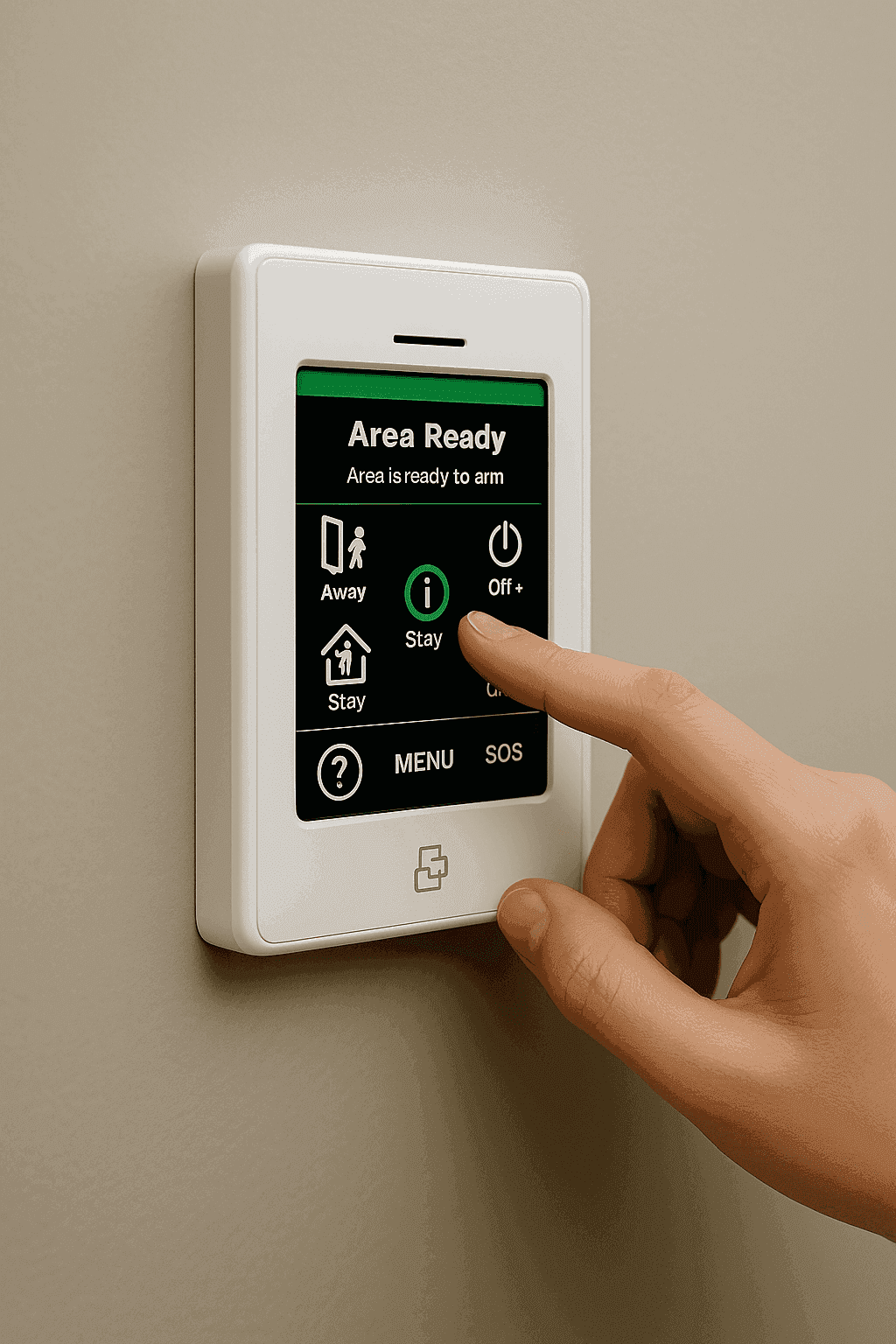
- Keypad and user controls. We test the buttons, display and user codes, and confirm arming and disarming work properly.
- Communications and monitoring. We test the alarm’s communication path (internet, 4G or phone line). If your system is monitored, we arrange a test transmission with your monitoring company. Australia’s 3G networks have been switched off, and alarm communicators built for 3G can no longer connect. Some owners only discover this when someone tests it.
- Faults, tamper and event history. We check the event log for recurring problems and test the tamper circuits and fault reporting. The log often shows problems nobody knew about.
Warning signs your alarm needs attention now
- The keypad shows a battery, mains or trouble message
- The panel beeps or chirps
- False alarms with no obvious cause
- Wireless sensors dropping out or showing low battery
- You can’t remember the last time the system was serviced
- The battery is more than three years old, or you don’t know how old it is
None of these means disaster is imminent. Each one is a reason to book a check before your alarm picks its own moment to fail.
How often should an alarm be serviced?
Plan to replace the backup battery every 3 to 5 years, and have the whole system tested at least once a year. A yearly test catches a fading battery, a dead sensor or a communicator that has stopped reporting, before any of them turns into a failure. Book a service visit and we’ll test the lot.
Common questions
Can I just change the battery myself? Some people do, but it’s easy to get wrong (reversed leads can damage the panel), and a new battery tells you nothing about the sensors, siren and communicator. A technician can swap the battery and test the rest of the system in the same visit.
Will a service visit set off a false alarm? If your system is monitored, we arrange the test with your monitoring company first, so it isn’t treated as a real alarm.
How do I know when my battery was last changed? Look for a date label on the battery itself. If there isn’t one, or you can’t find the service records, treat it as due.
Do you service alarms you didn’t install? Not sure who installed yours? Call us and tell us what’s on the wall. We’ll let you know whether we can look after it.
Book your alarm service
We’re a licensed NSW security installer (NSW master licence ML000111327). Don’t wait for the 3 am beep, or the night the power goes out. Saint George Group services home alarm systems across Sydney’s north-west and Western Sydney, including Castle Hill, Kellyville, Rouse Hill, Blacktown, Windsor and The Ponds.
Request a service visit online and choose System Maintenance, or call 0435 752 953 or email jacob@stgg.com.au. We’ll call you to book a time.
Thinking about replacing an ageing system instead? Request a free on-site quote.