
Hotel security has to work without making guests feel like they’re walking into a fortress. For most properties, that comes down to a few things done well: who can get into which areas, cameras covering the public spaces, and a way to let visitors in without opening the door to anyone.
Access control for guest and staff areas
Electronic key cards or fobs mean lost keys aren’t a security problem — a lost card can be deactivated and a new one issued, without rekeying the whole building. The same system can restrict staff to the areas they actually work in, and limit guest floor access to the floor they’re staying on in multi-storey properties. For a small bed and breakfast or short-stay property, this might just be one or two doors; for a larger hotel, it extends across guest floors, a gym or pool area, and staff-only zones — the approach scales either way, which is covered in more depth in our access control guide.
- Guest room entry — electronic locks, deactivated instantly if a card’s lost
- Staff access — restricted to work areas and shift times
- Back-of-house doors — kitchens, storerooms and plant rooms kept off-limits to guests
CCTV for public and common areas
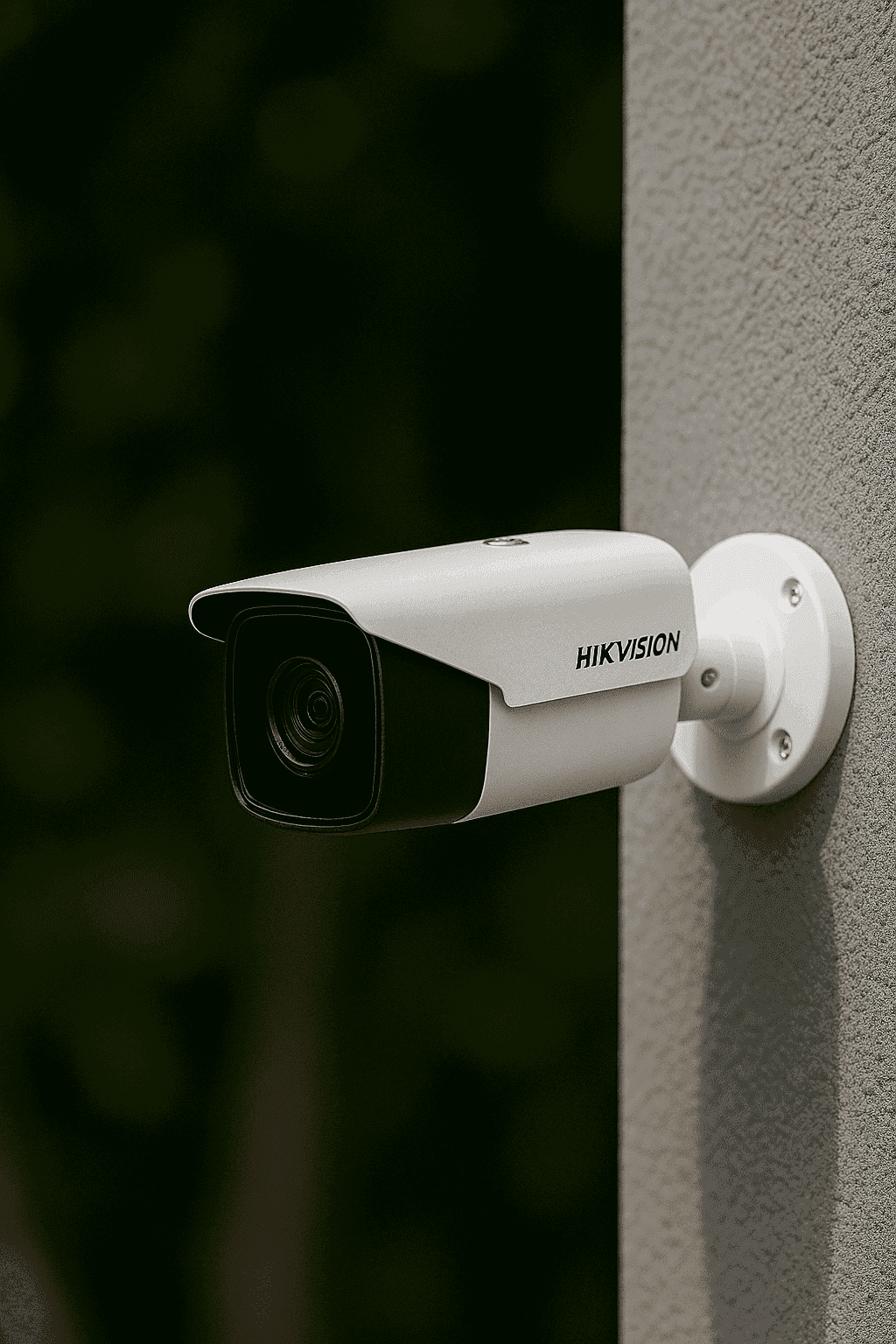
Cameras covering the lobby, corridors, car park and back-of-house areas cover most of what a hotel needs to see — not guest rooms themselves, which stay private. Footage helps with everything from a dispute over a damaged room to confirming who was in a common area at a given time, and is viewable through an app for managers checking in remotely.
Entry and exit points matter most — the main lobby, any after-hours entrance, and stairwells or lifts connecting to guest floors. A smaller property might only need two or three cameras covering these; a larger one with multiple wings needs more, but the principle’s the same either way: cover where people actually pass through, not every square metre of the building.
Intercoms and visitor screening
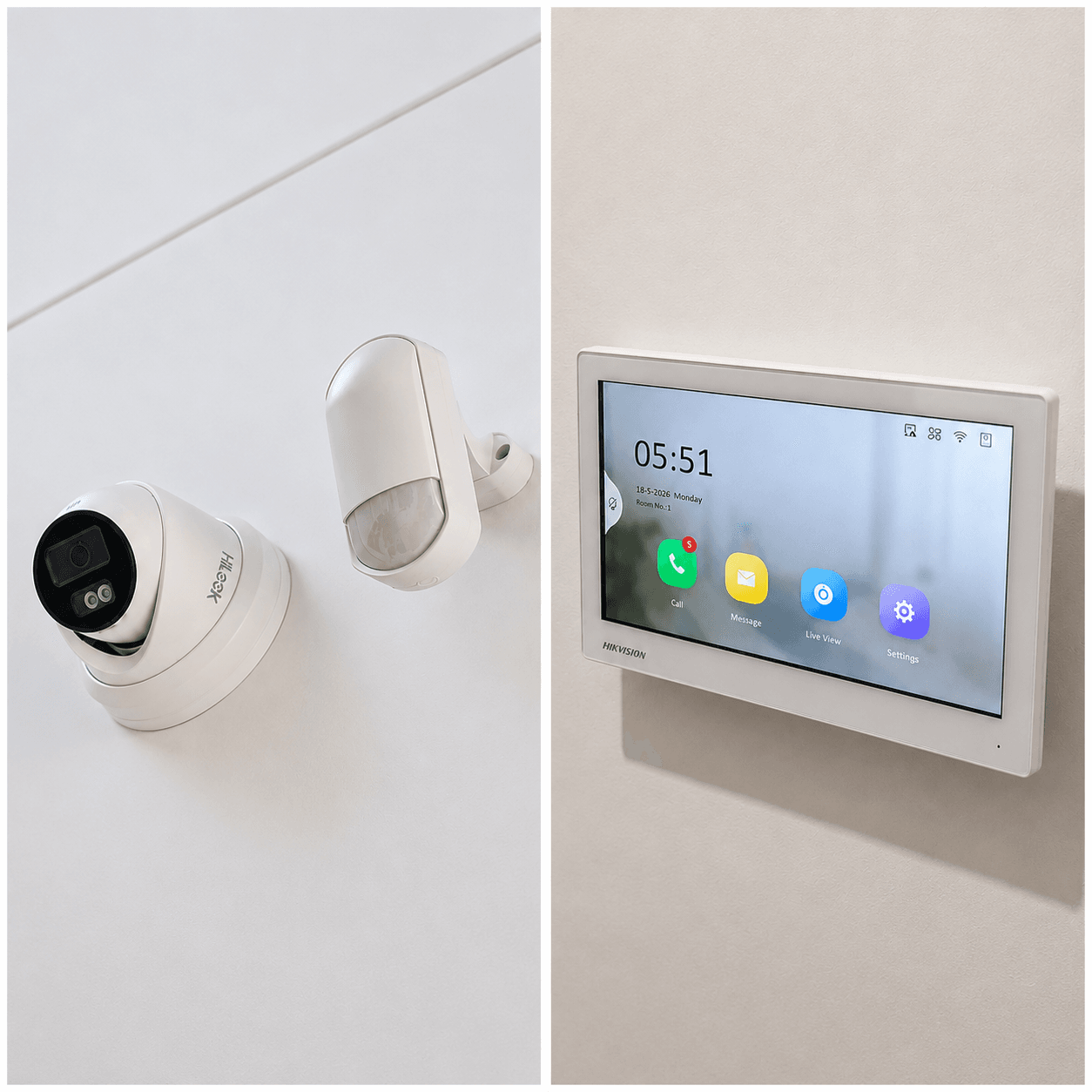
For smaller properties or those with an after-hours unattended entrance, a video intercom at the main door lets staff (or a remote manager) see and speak to whoever’s there before buzzing them in — useful for late check-ins or deliveries outside reception hours.
Guest privacy and surveillance rules
Cameras belong in public and common areas, not guest rooms or anywhere guests have a reasonable expectation of privacy. Where cameras cover areas where staff work — reception, back-of-house — the Workplace Surveillance Act 2005 (NSW) applies: cameras need to be clearly visible, with signage at each entrance, and staff need written notice at least 14 days before surveillance starts (new staff need notice before they start).
Costs
Cost depends on the size of the property, how many entry points need access control, and how much common area needs camera coverage. A small boutique property is a different job to a larger hotel with multiple floors and back-of-house areas. If you’re renovating or doing a fit-out, getting cabling in before walls and ceilings close up is worth factoring into the build timeline — it’s a simpler job during construction than retrofitting afterwards.
How Saint George Group can help
We’re a licensed NSW security installer (NSW master licence ML000111327). Whether it’s electronic locks for guest rooms, cameras for common areas, or an intercom for an unattended entrance, get an access control quote or a CCTV quote and we’ll put together something that fits the property.
Quick answers
Can you cover a multi-floor property? Yes — access control and cameras both scale to cover as many floors and entry points as the property needs.
Do you monitor the cameras for us? No — footage is viewable through the app. We don’t run a back-to-base monitoring service.
Hotel security works best when it’s barely noticeable — guests get a smooth, welcoming stay, while access control and cameras quietly cover the areas that actually need it.