Most NSW homeowners looking at security are weighing up the same few things: cameras, an alarm, maybe an intercom, and how much of it they want to manage themselves. This guide walks through the options, what the rules actually say, and what to expect on cost.
Types of home security systems
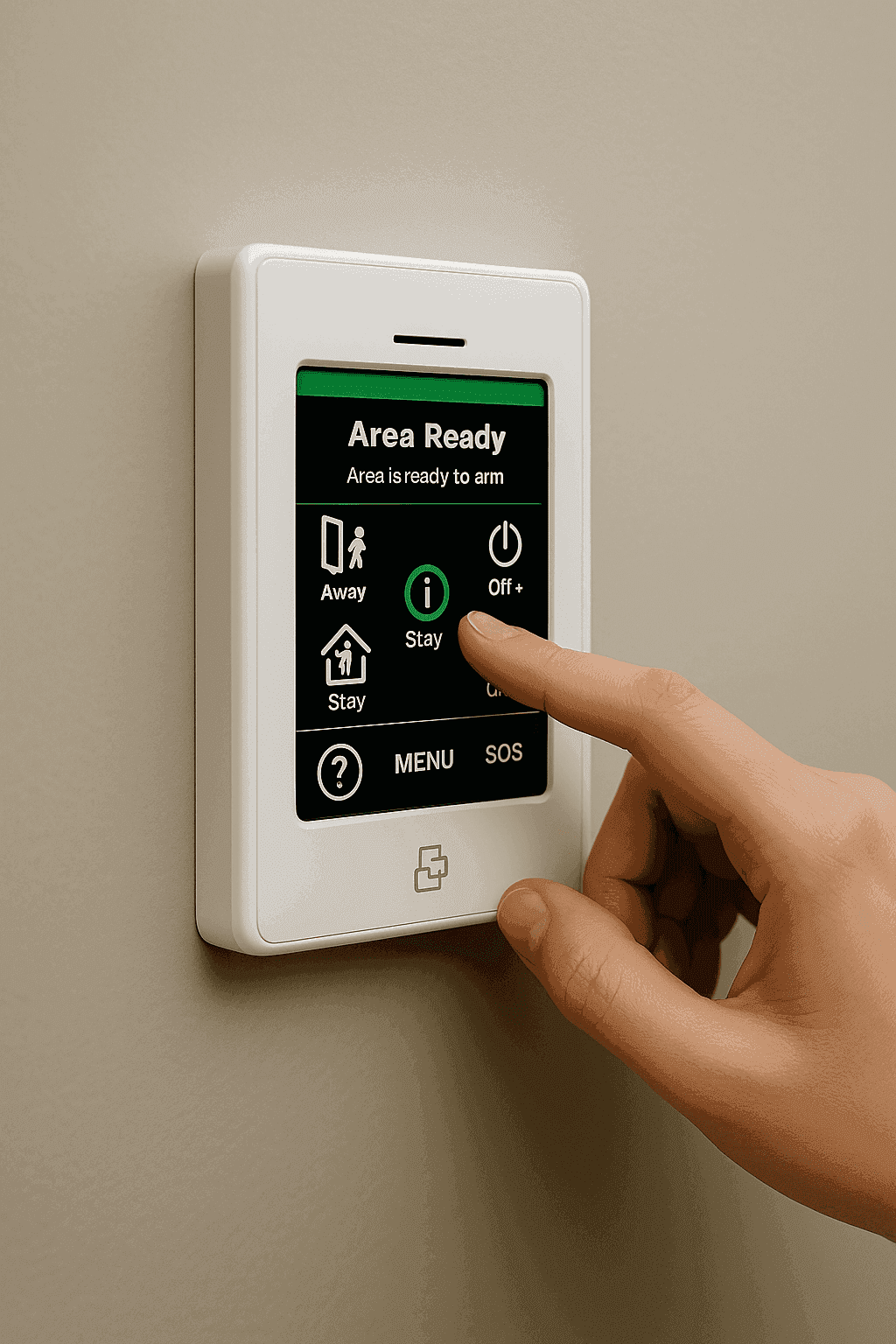
Alarm systems use door and window sensors plus motion detectors (PIRs) to pick up an intrusion, with a keypad to arm and disarm the system and a siren to deter and alert. Many modern alarms also connect to an app, so you get a notification on your phone rather than relying on the siren alone.
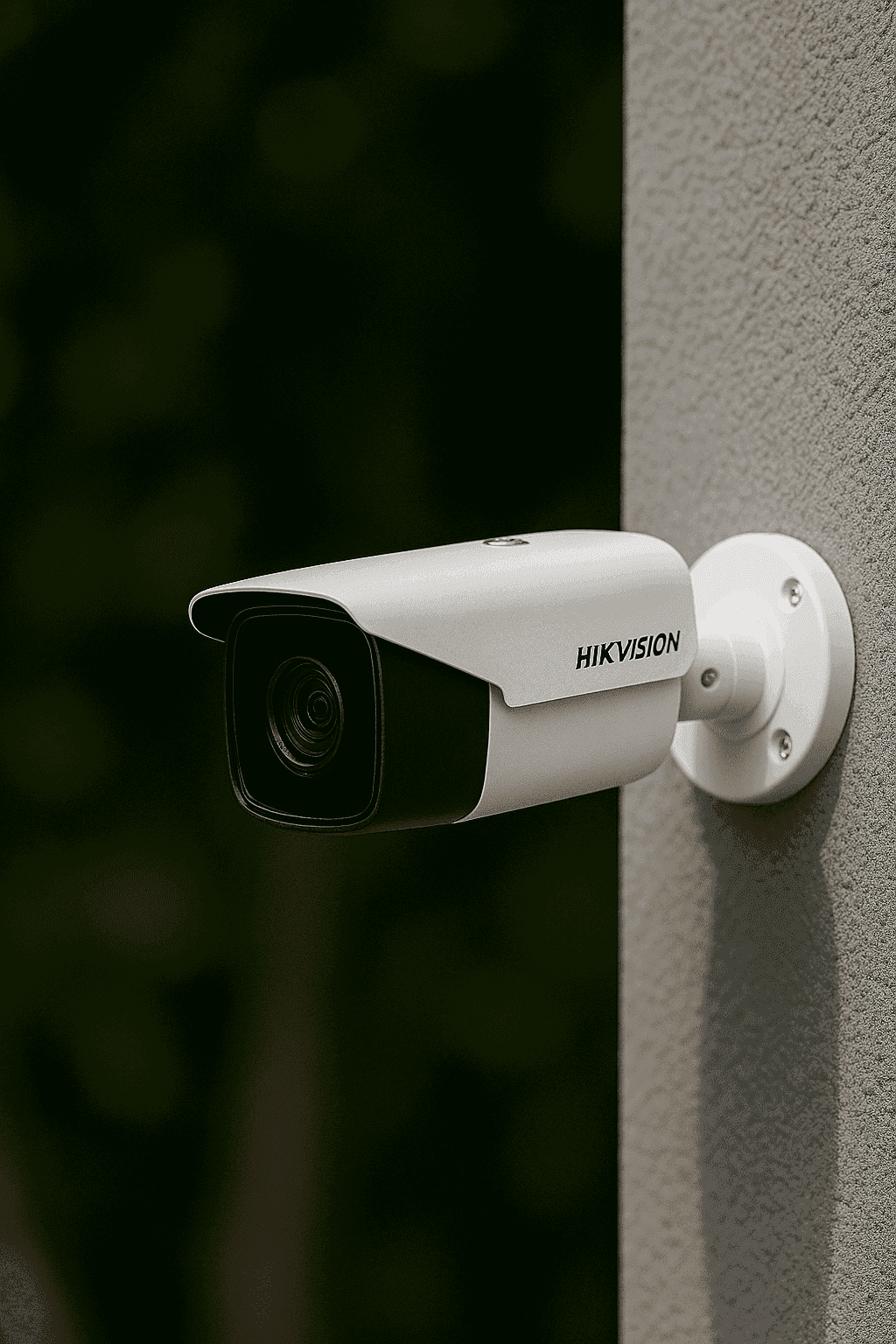
Security cameras have come a long way — most current models offer high resolution, night vision and motion-triggered recording, with footage viewable live or after the fact through an app. Weather resistance matters for anything mounted outside, particularly through a Sydney summer storm season.
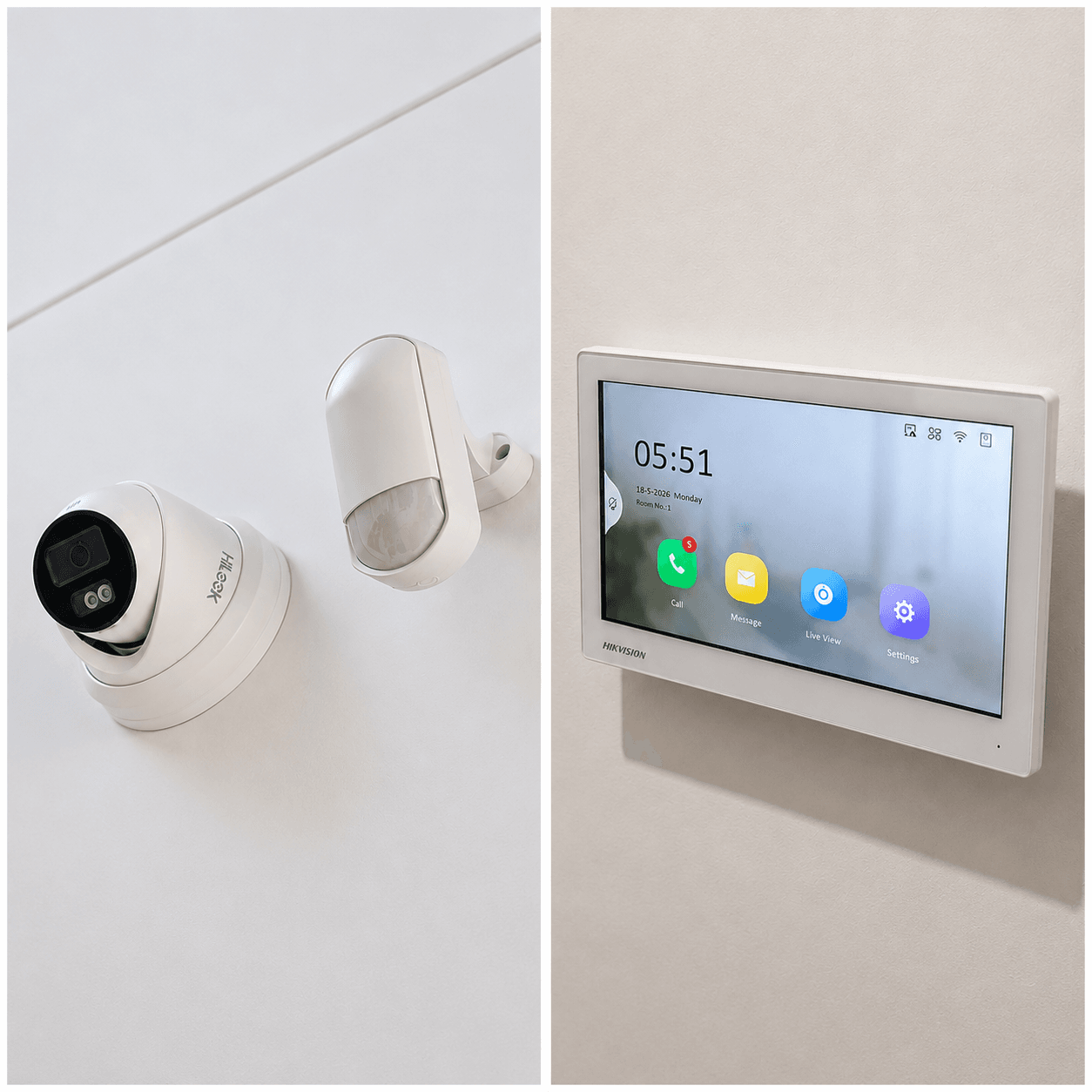
Video intercoms let you see and speak to whoever’s at the door before you open it, from an indoor panel or your phone. They’re a natural pairing with a smart lock or gate access system if you’ve got one.
Smart locks and access control add keyless entry and temporary access codes for visitors or tradies, with a log of who came and went — useful if you’re not always home to let people in. If you want your cameras, alarm and entry system talking to each other rather than running separately, see our guide to smart home security integration.
What we install
We install Hikvision and HiLook CCTV, Bosch and Reliance XR alarm systems, and Hikvision intercoms — chosen because they’re reliable gear we can get parts and support for, not because they’re the only options out there. Our three most popular systems:
- CCTV system — six cameras and an 8-channel NVR recorder
- Alarm system — keypad, PIR sensors and siren
- Intercom system — indoor monitor and outdoor door station
Rules and standards in NSW
In NSW, the biggest legal risk with home cameras is audio. Recording other people’s private conversations without their consent is generally an offence under the Surveillance Devices Act 2007, so it’s safest to leave audio recording switched off. It’s also good practice to keep cameras pointed at your own property, away from neighbours’ yards and windows.
Alarm systems installed in Australia are generally expected to meet AS/NZS 2201.1, the standard covering intruder alarm systems — this applies to the alarm itself, not CCTV or other security equipment.
We’re licensed by NSW Police Force Security Licensing & Enforcement Directorate (SLED) — our NSW master licence is ML000111327, shown in the footer of this site.
Costs
What you pay depends on how many cameras or sensors you need, the brand and spec you choose, and whether it’s DIY or professionally installed.
Professional installation costs more upfront than DIY but generally means proper cable runs, correct camera placement, and someone to call if something stops working — worth weighing against the time and risk of doing it yourself, especially for anything that needs to go through a roof space or near mains wiring.
Installation tips
Position cameras to cover entry points — front door, back door, driveway — rather than trying to cover the whole yard. Avoid pointing a camera directly into the sun or a security light, as it washes out the image at exactly the time of day you’d want to see something clearly. For anything mounted outside, check it’s rated IP65 or better so it holds up to NSW weather.
If you’re adding smart devices to your home network, a separate guest network or VLAN for security devices is a sensible step, along with making sure your router uses WPA3 encryption where it’s supported.
How Saint George Group can help
We’re a licensed NSW security installer (NSW master licence ML000111327) covering Sydney, Newcastle, Wollongong, the Central Coast and the rest of NSW. Whether you want one camera over the front door or a full system with alarm and intercom, get a CCTV quote and we’ll put together something that matches your home and budget.
Quick answers
Do you offer 24/7 monitoring? No — our systems are self-monitored through the app rather than connected to a back-to-base monitoring centre. You get the alerts and footage; checking in is on you.
Can I start small and add more later? Yes. Most systems can be expanded — extra cameras, sensors or an intercom — without replacing what’s already installed.
Do you install systems other than the three listed above? Yes, those are just our most popular starting points — systems are put together to suit the property, not a fixed package.
Home security doesn’t have to mean the biggest system available — it means covering the right entry points, understanding what the rules actually require, and choosing gear that’s going to keep working for years. Start with the basics and add to it as your needs change.