
Most businesses don’t need an enterprise security operation — they need cameras that work, an alarm that’s actually armed, and a way to control who gets through the front door. This guide covers the basics for NSW business owners working out what they actually need.
What you’re protecting against
The common risks for most small and medium businesses are straightforward: break-ins outside trading hours, stock walking out the back door, and staff needing a safe way to let people in and out during the day. A good system covers all three without needing a security team to run it.
What a retail shopfront needs is often different to what an office needs. A shop usually cares most about the till, stockroom and after-hours entry; an office cares more about who can get past reception and into different areas during the day. Worth thinking about what you’re actually trying to stop before picking a system, rather than buying everything on offer.
Access control for offices and premises
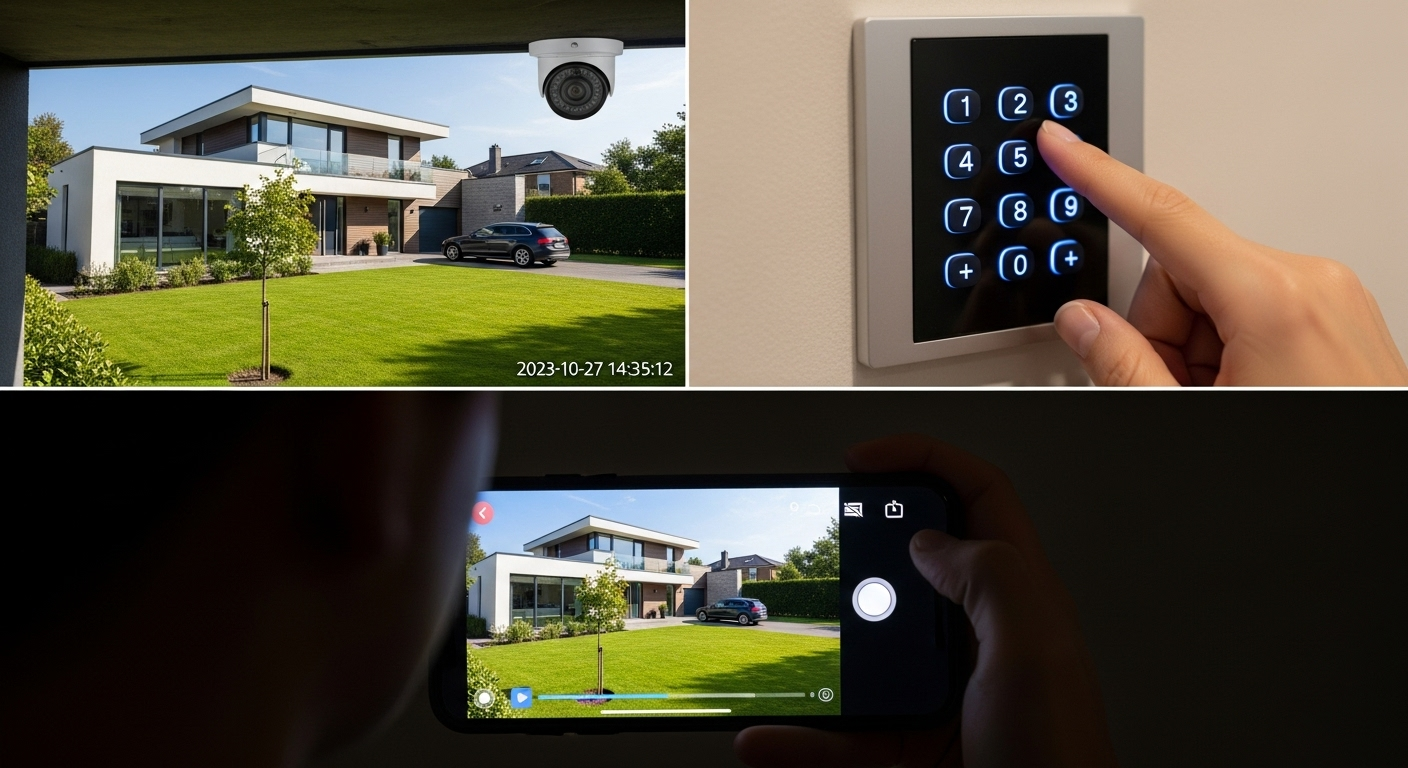
A keypad, fob or card system at the front door means you’re not relying on keys that get lost or copied, and you can see who came and went. For a reception area or shopfront, an intercom lets staff screen visitors before buzzing them in, rather than opening the door to anyone who knocks.
- Keypad or fob entry — no more cut keys floating around, and access can be switched off instantly if someone leaves
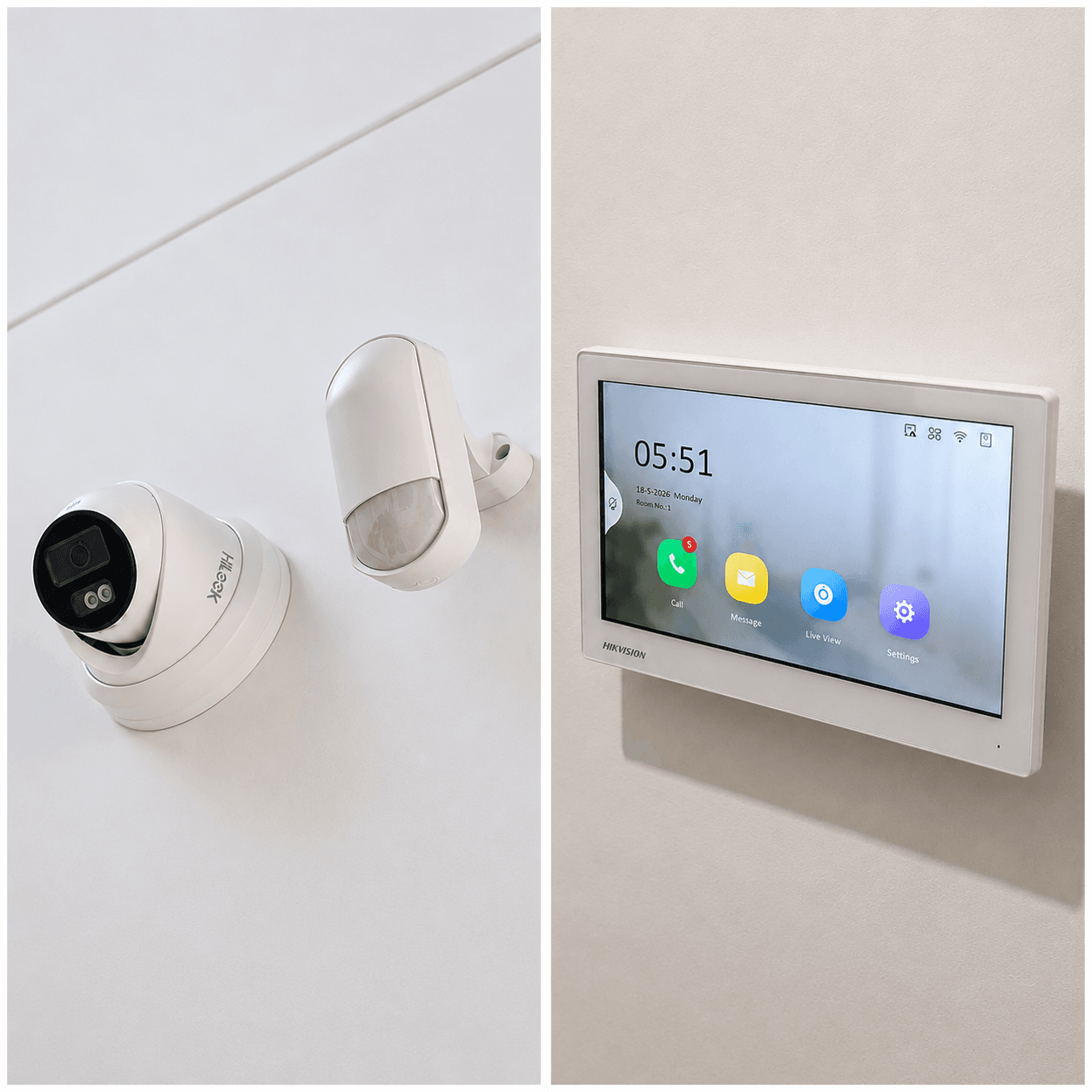
- Intercom at reception — see and speak to visitors before letting them in
- After-hours restrictions — set which doors work and when
If you’re after a video intercom for the front door, get an intercom quote. For a larger site with multiple buildings or a few separate offices, the same approach scales up — it’s the same core idea covered in our access control guide, just applied across more doors.
CCTV for business premises
Cameras covering entrances, the stockroom and the till area cover most of what actually goes wrong — most incidents are either someone getting in after hours or something going missing during the day. Footage is viewable live or after the fact through an app, so you can check in from anywhere.
Alarms
A monitored or self-monitored alarm with door/window sensors and motion detectors covers the building outside trading hours. Ours connect to an app, so you get a notification if the alarm triggers rather than relying on the siren alone — we don’t run a back-to-base monitoring service, so acting on an alert is on you. For a shopfront, pairing door/window sensors with a motion detector covering the main floor usually covers most of what matters; a stockroom or office with valuable equipment might warrant its own sensor as well.
Compliance basics
If your cameras cover areas where staff work — not just the entrance or stockroom — the Workplace Surveillance Act 2005 (NSW) applies: cameras need to be clearly visible, with signage at each entrance, and staff need written notice at least 14 days before surveillance starts (new staff need notice before they start). Keep footage access limited to people who actually need it.
Costs
Cost depends on how many cameras, sensors and doors you need covered, and whether it’s a new install or an upgrade to something already there.
A single shopfront with a couple of cameras and a basic alarm costs a lot less than a multi-door office with access control throughout — get a quote once you know roughly what you need covered. If you’re leasing, it’s also worth checking with the landlord early: some fit-outs restrict what can be mounted on the building, and getting that sorted before ordering gear saves a redo later.
How Saint George Group can help
We’re a licensed NSW security installer (NSW master licence ML000111327), covering Sydney, Newcastle, Wollongong, the Central Coast and the rest of NSW. Tell us what you’re trying to protect — a single shopfront or a multi-site business — and get a CCTV and alarms quote or an intercom quote for entry control.
Quick answers
Do you monitor the alarm for us? No — alerts come through the app. We don’t offer back-to-base monitoring.
Can you add more cameras or doors later? Yes, most systems are set up to expand as the business grows.
Security for a business premises doesn’t need to be complicated: cover the entrances, control who gets in, and make sure someone’s actually getting the alerts when something happens.